
How Long Does It Take for a Website to Rank After SEO? (And Why You Need More Than Just SEO)
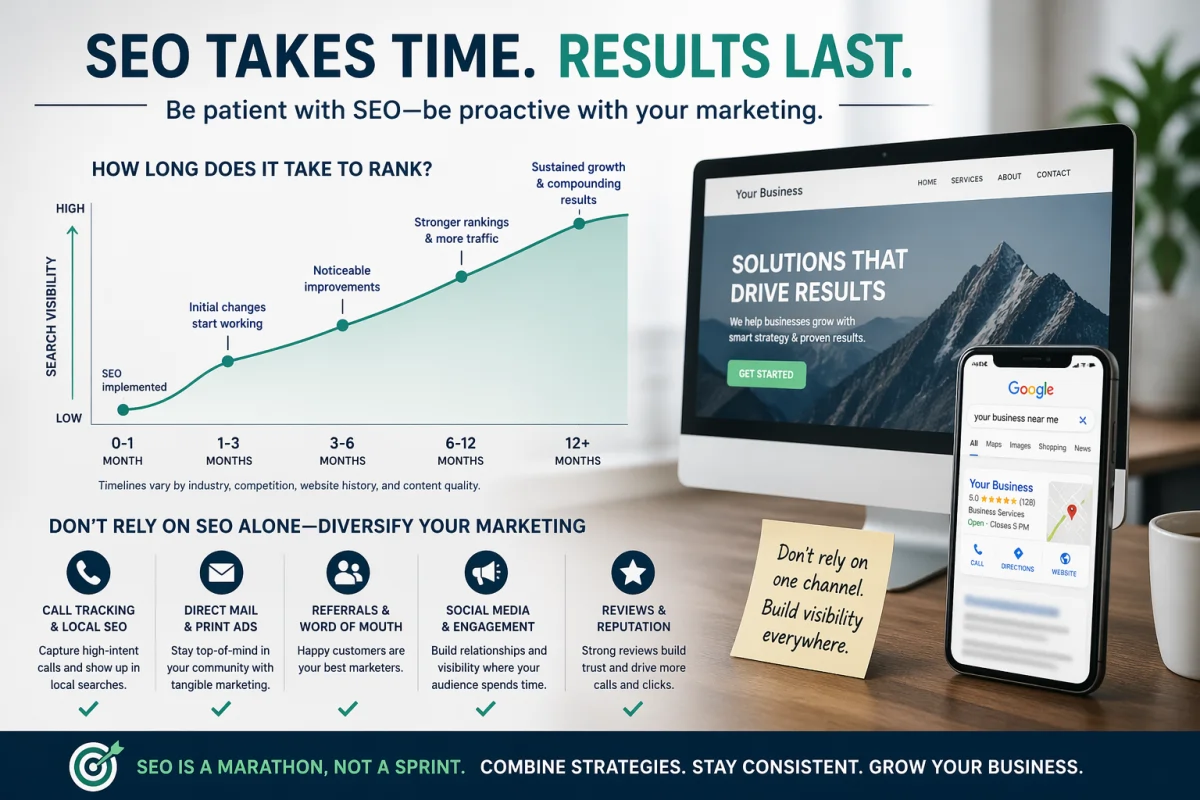
One of the most common questions business owners ask after launching a new website or starting an SEO campaign is:
“How long will it take before my website ranks in Google?”
While there’s no single answer that fits every business, understanding how search engine optimization works — and why it takes time — will help set realistic expectations and guide smarter marketing decisions.
Understanding the Timeline for SEO Results
SEO isn’t a sprint, it’s a marathon.
When you optimize your website for search engines, you’re essentially building a foundation of credibility, relevance, and trust with Google (and other search platforms). But search engines don’t update their view of your website instantly. Here’s a general timeline you can expect:
First 1–3 Months
This is the setup phase.
- Technical SEO improvements are being implemented
- Content is audited and optimized or newly created
- On-page and meta tags are tweaked
- Site structure and internal linking are refined
You might start seeing slight movement during this period but big rankings typically don’t happen this early.
Months 3–6
This is where things start to gain traction.
With consistent optimization and publishing of quality content:
- Search engines begin to re-index and understand your site
- Keyword rankings start improving
- Organic traffic often begins to increase
Months 6–12
This is when SEO starts showing meaningful results.
For most local or small business keywords:
- Consistent improvements become noticeable
- Competitive keywords may start ranking on page 1-3
- Organic traffic and qualified leads increase more steadily
NOTE: popular or high-competition keywords may still require more time and effort.
Why SEO Takes Time
Here are a few key reasons SEO isn’t instant:
- Search engines need time to crawl and re-index your changes
- Competitors may already have established authority
- High-value keywords are more competitive
- SEO success depends on relevance, content quality, user experience, and consistency
In short: SEO compounds over time. The longer you invest in it, the stronger your organic presence becomes.
Don’t Rely Only on SEO — Marketing Should Be Diverse
While SEO is one of the most effective long-term strategies for traffic and leads, relying on it alone — especially early on — can slow growth. Here’s why you should diversify:
Traditional & Other Digital Channels Still Work
Marketing isn’t just online search. Some effective complementary methods include:
Social Media Marketing
- Builds brand awareness and engagement
- Drives traffic and referral interest
Email Marketing
- Keeps your audience engaged
- Encourages repeat business and referrals
Local Advertising
- Radio spots, newspaper ads, community sponsorships
- Great for local brand recognition
Podcasts/YouTube
- Sponsor a podcast or advertise on Youtube channels whose audience is your target demographic
- Sponsor a podcast with similar subject matter relevance (home improvement, health, fitness, etc.)
- Start your own podcast or YouTube channel to become considered the go to source for good information
Word-of-Mouth & Networking
- Personal recommendations are powerful
- Especially valuable for service-based businesses
Why Diversifying Matters
Think of SEO as long-term investment, and other marketing methods as short-term revenue drivers.
- While SEO is growing your organic footprint over months,
- PPC, email campaigns, and local outreach can drive immediate traffic and calls.
Using both simultaneously means your business doesn’t have to wait months before you see results.
Final Thoughts
SEO is one of the most valuable long-term strategies for building sustainable visibility online — but it isn’t instantaneous.
- Expect solid results typically between 6 and 12 months
- Use other marketing methods to generate leads now
- Keep your approach diversified — that’s how the most successful businesses grow
About The Author