
What Exactly Is “AI Mode”?
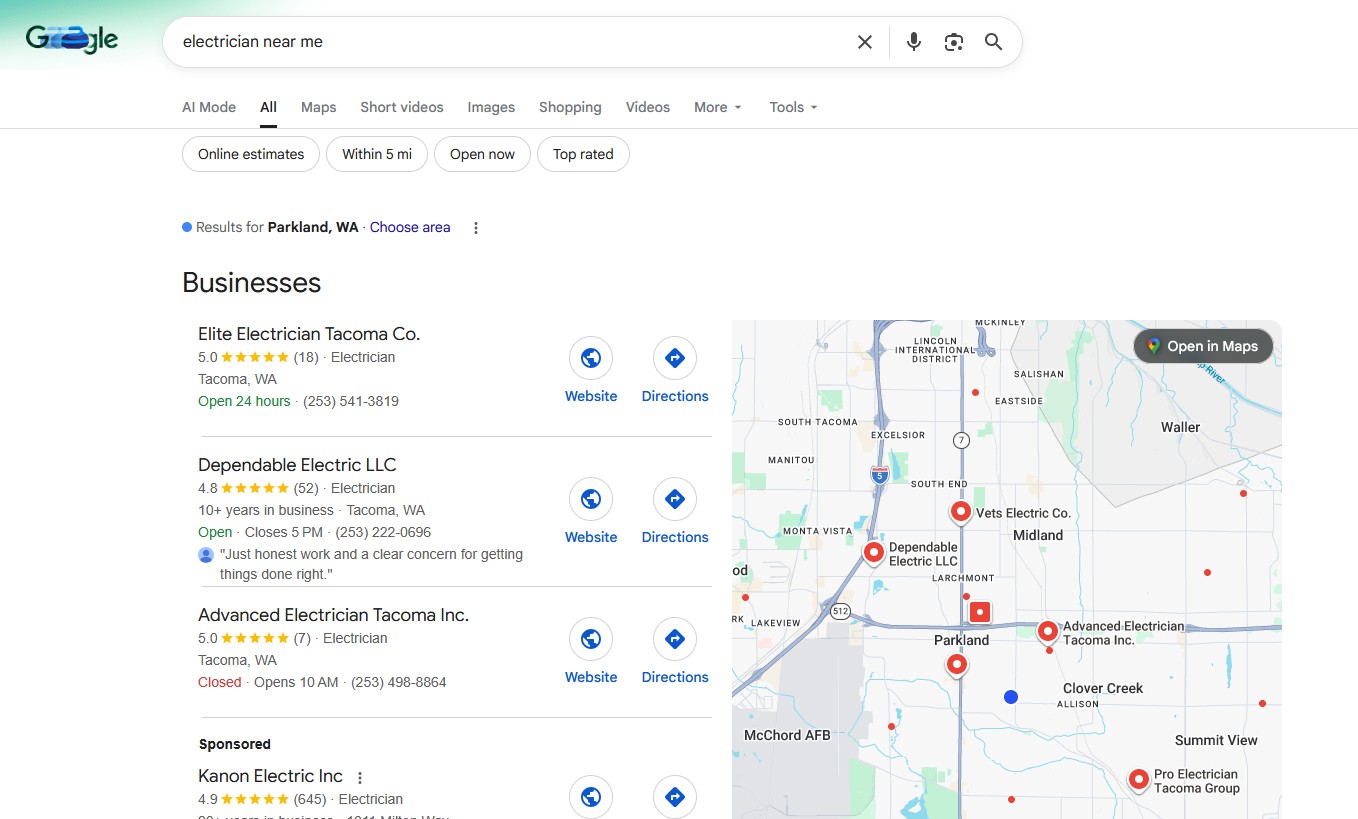

If you've been searching lately — whether in your browser, the Google app, or even from Chrome's address bar — you've probably noticed something new popping up at the top: a big, conversational box labeled AI Overview but there is also a tab that is labelled AI Mode.
NOTE: I've cover AI Overview separately just to keep things as clear as possible even though, depending upon what you're using to search, you might get the AI Overview first and only see AI Mode if you click into it which shows much of the same info.
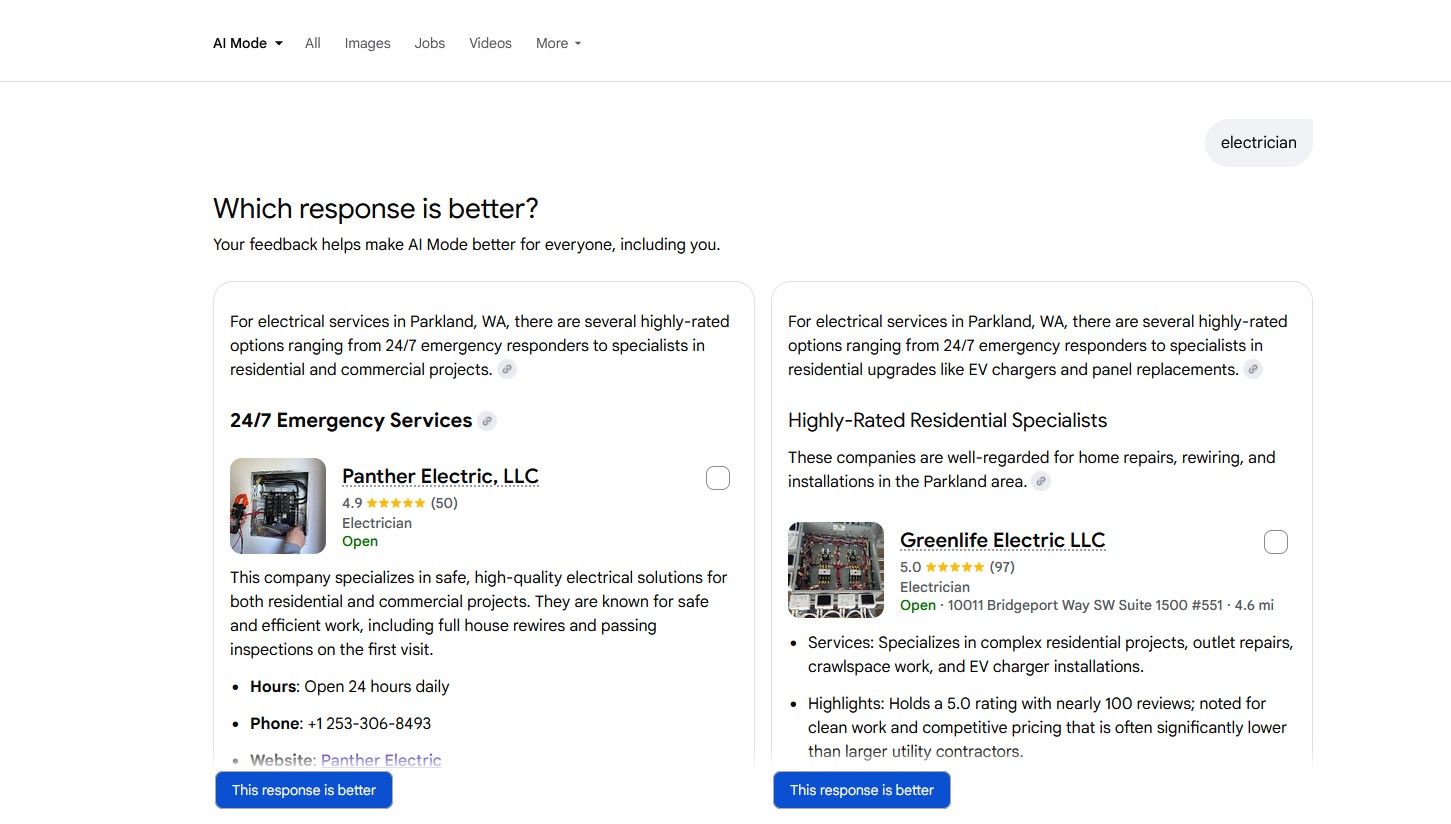
It doesn't look like the usual 10 blue links. Instead, you get a polished, synthesized answer, often with follow-ups, images, tables, or even interactive elements, plus cited links at the bottom.
This isn't just another AI summary — it's Google's full-blown AI search experience, and it's rolling out widely in 2025–2026.
What Exactly Is "AI Mode"?
AI Mode is Google's most advanced AI-powered search interface. It's designed for complex, open-ended, or multi-part questions — the kind where traditional search used to leave you clicking through 5–6 tabs.
You can:
- Type, speak, upload a photo/PDF, or even use your camera (in some versions).
- Get a detailed, reasoned answer right away.
- Ask follow-up questions in the same thread (it remembers context).
- See helpful web links, sources, images, charts, or even generated visuals/simulations.
It's like chatting with an extremely well-read research assistant who has real-time access to the entire web — but grounded in Google's search index.
You access it in a few ways:
- A dedicated AI Mode tab at the top of google.com
- Directly at google.com/ai
- In the Google app (tap the AI Mode button)
- Sometimes integrated directly into Chrome's omnibox for quick AI answers
Where Does the Information Actually Come From?
This is the part a lot of people wonder about — especially when the answer feels almost magically complete.
AI Mode does NOT hallucinate freely. It is heavily grounded in Google's existing web index (the same one that powers classic search results).
Here's how it actually works under the hood:
- Query Fan-Out
Google breaks your question into multiple subtopics and fires off dozens (or even hundreds) of simultaneous searches across the web. This lets it explore far more ground than a single traditional query. - Synthesis with Gemini
The results are fed into Google's Gemini models (currently Gemini 3 or custom variants like Gemini 2.5/3 Pro). These models reason over the retrieved information, cross-reference, organize, and generate a coherent response. - Citation & Grounding
Every claim is backed by real web pages. You'll see source links, and Google explicitly tries to pull from high-quality, diverse perspectives. If confidence is low, it may show fewer synthesized details and more direct links. - Optional Deep Search (for subscribers)
For very complex queries, Deep Search can browse hundreds of sites in the background and produce a fully cited report.
In short: The information comes from the open web — the same pages you could find yourself if you had hours to research. AI Mode just does the heavy lifting of searching, reading, comparing, and summarizing in seconds.
Why Is It Suddenly Everywhere?
Google has been gradually rolling this out since mid-2025 (starting in the U.S., then expanding globally). It's an evolution of earlier features like AI Overviews (the shorter summaries that used to appear sometimes). AI Mode is the fuller, conversational version — and Google is pushing it hard because:
- Users love getting answers without clicking around.
- It competes directly with tools like Perplexity, ChatGPT Search, Claude, etc.
- It works beautifully with multimodal input (photos, voice, camera).
Should You Trust It?
Mostly yes — but treat it like a very smart research assistant, not an infallible oracle.
Google openly says AI Mode (like all generative AI) can still make mistakes, especially on very new, niche, or controversial topics. Always check the cited sources. The feature improves rapidly with user feedback (thumbs up/down buttons help).
The Bigger Picture
"AI Mode" at the top of searches is part of a fundamental shift: search is moving from "here are links" to "here's the answer, plus the sources if you want to dig deeper."
For everyday users → it's incredibly convenient.
For publishers & SEO folks → it means visibility now depends on being cited in AI responses, not just ranking #1.
If you haven't tried it yet, go to google.com/ai and ask something genuinely hard or multi-part. You'll immediately see why it's becoming the default experience for so many searches.The web isn't disappearing — it's just getting a much smarter front door.
About The Author